Ever wondered why a mala has exactly 108 beads? Discover the surprising math and meaning behind this sacred number, then shop verified puja products on AstroVega.
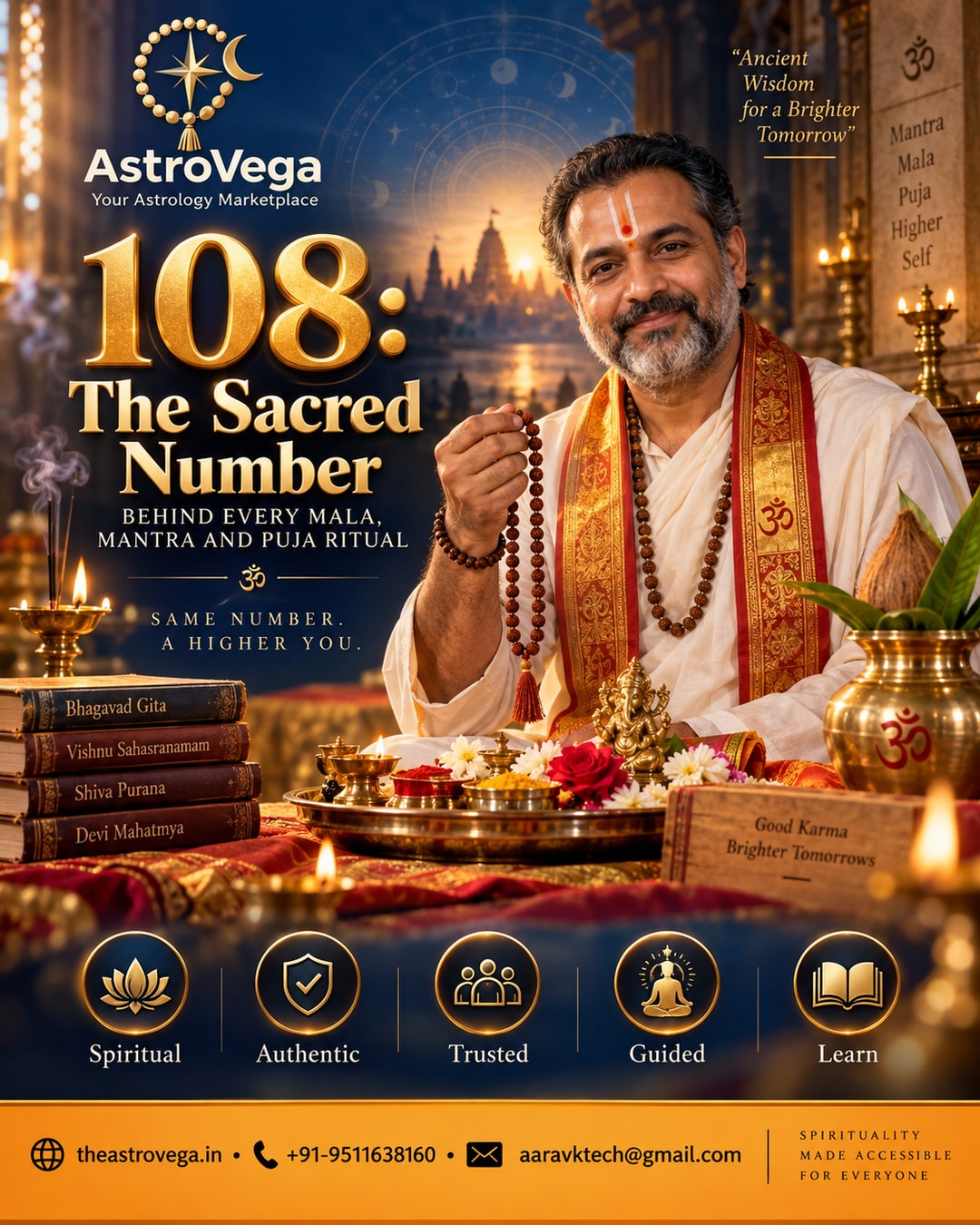
108: The Sacred Number Behind Every Mala, Mantra and Puja Ritual
If you've ever held a japa mala in your hands, you've probably noticed something specific - it always has 108 beads, never 100, never 110. That's not a coincidence, and the reasoning behind it is genuinely interesting once you dig into it.
Where the number 108 actually comes from Ancient Vedic scholars linked 108 to astronomy - the approximate distance between the Earth and the Sun is said to be 108 times the Sun's diameter, and a similar ratio exists between the Earth and Moon. Whether or not that's scientifically exact by today's measurements, the symbolic weight stuck. In Sanskrit numerology, 1 represents the divine, 0 represents wholeness, and 8 represents infinity - together forming a number considered spiritually complete.
Why mantra repetition uses this exact count When someone does japa (mantra repetition) with a mala, each bead marks one repetition, and completing a full round means chanting the mantra 108 times. Traditionally, this count was believed to help focus the mind fully - not too short to lose concentration, not so long that it becomes mechanical. It's less about magic and more about disciplined, meditative repetition.
The same number shows up beyond malas You'll find 108 referenced in temple architecture, in the count of certain planetary positions in astrology charts, and even in some puja rituals that involve 108 offerings or 108 names of a deity. It's one of those numbers that quietly threads through Indian spiritual practice without most people questioning why.
Does the material of the mala matter Rudraksha, tulsi, sandalwood, and crystal malas each carry their own traditional associations, but the number of beads stays constant. If you're picking a mala for daily practice, comfort and quality matter more than debating which material is objectively best - that's a personal and often family-tradition choice.
Where AstroVega fits into this If you're looking to start or deepen a mantra practice, or need genuine puja samagri for a ritual, AstroVega's marketplace lets you browse malas, puja essentials and astrology books alongside booking a pandit or astrologer consultation - all in one place, without running between five different stores or contacts.
My take: if you're just starting out, a simple rudraksha or tulsi mala is a solid, affordable entry point - you don't need to overthink the material at first. Where I'd actually spend a bit more time is choosing which puja products or samagri kit fits your specific ritual, since that's where mismatched items cause the most last-minute scrambling. Browse verified listings first, then book your pandit - doing both together on one platform genuinely saves a headache.
🌐 theastrovega.in · 📞 +91-9511638160 · 📧 aaravktech@gmail.com